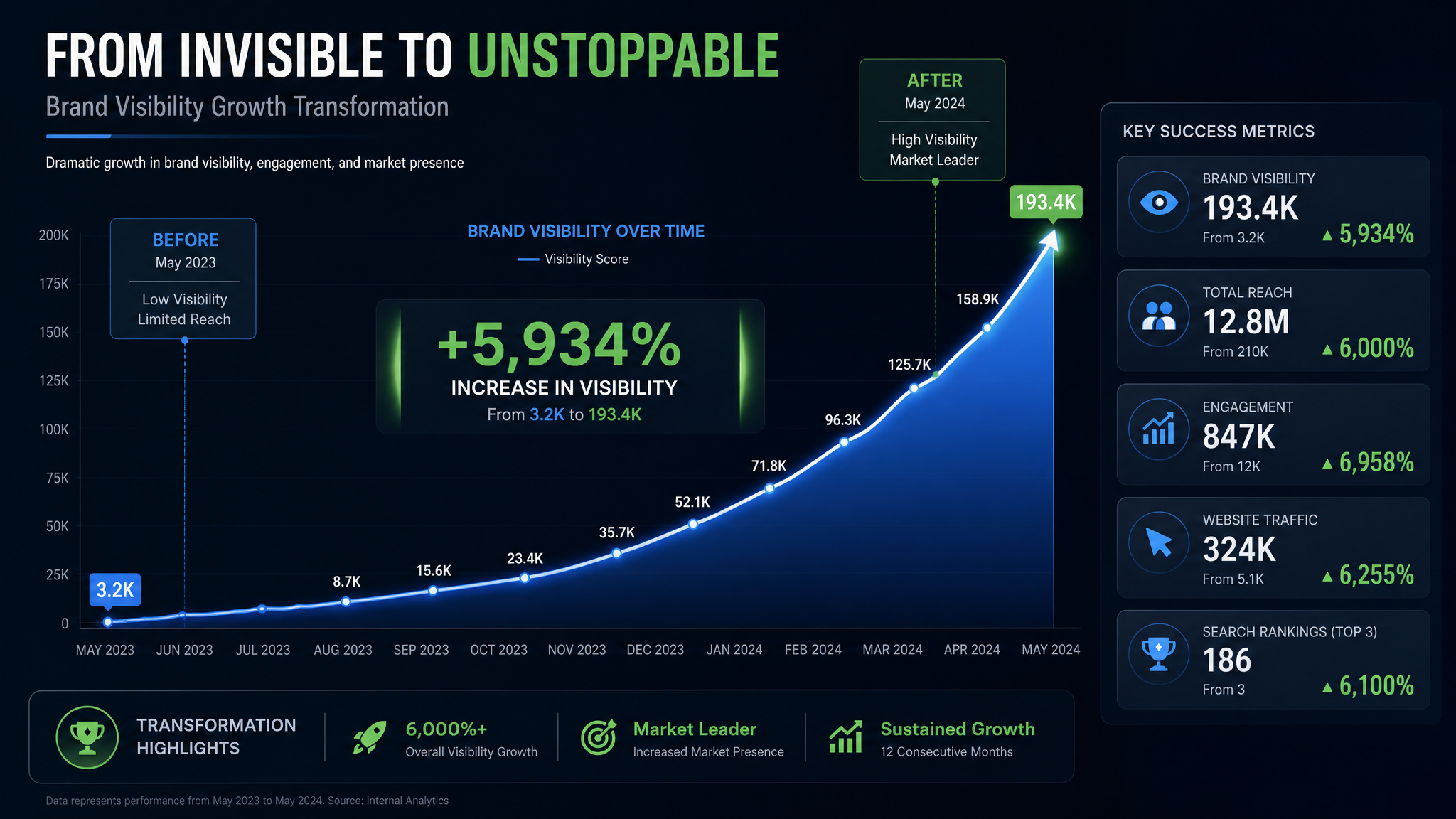
GEO Case Study: How a Brand Increased AI Visibility by 40%
What is a GEO case study?
A GEO case study shows how a brand improves its visibility in AI-generated responses by optimizing content, authority, and tracking metrics like Share of Model.
It demonstrates measurable growth in AI search performance over a defined time period.
Introduction
Theory is useful.
But results are what matter.
Here's a step-by-step breakdown of what happened when GEO was implemented systematically for a B2B brand — and what specifically moved the needle.
The Starting Point
The brand: A B2B software company with a solid SEO foundation.
The problem: Despite strong Google rankings and consistent content output, they had almost no visibility in AI-generated responses.
Baseline metrics:
- GEO Score: 52/100
- Share of Model: 8% across key prompts
- AI mentions: Occasional, inconsistent, mostly buried
When buyers asked AI tools for recommendations in their category, competitors were named. They weren't.
The 60-Day Plan
No shortcuts. No hacks. Four systematic steps.
Step 1: Content Restructuring (Days 1–14)
The existing content was well-written but formatted for human readers, not AI extraction.
Changes made:
- Rewrote key service and product pages with direct-answer formatting
- Added clear definitions, bullet-pointed features, and explicit use cases
- Created a dedicated "What is [product category]?" page targeting the exact language buyers use in AI prompts
- Structured all content around common prompt patterns: "best tools for X," "top platforms for Y," "alternatives to Z"
Why it worked: AI looks for content that directly answers the question being asked. Reformatting existing content to match prompt intent is one of the fastest wins in GEO.
Step 2: Authority Expansion (Days 10–30)
Content alone isn't enough. AI needs third-party validation that your brand is credible.
Actions taken:
- Secured listings on 6 major software review platforms
- Reached out to industry publications for contributor articles
- Updated existing client case studies to be hosted on client sites (not just theirs)
- Identified and filled gaps in directory and comparison site coverage
Why it worked: AI weights external mentions heavily. Every credible site that references your brand adds to the authority signal that gets you included in responses.
Step 3: Prompt Alignment (Days 20–45)
This step is about speaking the language AI users actually speak.
Actions taken:
- Researched the exact prompts buyers use when asking AI for recommendations in their category
- Created dedicated content targeting each high-value prompt cluster
- Optimized meta descriptions and page titles to match prompt language exactly
Example shift:
- Before: "Our platform helps B2B companies improve their digital presence"
- After: "The best GEO tracking tool for B2B companies monitoring AI search visibility"
The second version matches the prompt. The first one doesn't.
Step 4: Weekly Tracking and Iteration (Days 1–60)
Every change was tracked. Every week, the data shaped the next week's priorities.
What tracking revealed:
- Week 2: First signs of improvement in Perplexity mentions
- Week 4: ChatGPT mentions up but sentiment was neutral — led to additional content work
- Week 6: Competitor appeared in a new prompt category — immediately addressed
- Week 8: Consistent mentions across all three major AI tools
Without weekly tracking, most of these insights would have been invisible.
Results at 60 Days
| Metric | Before | After | |---|---|---| | GEO Score | 52 | 81 | | Share of Model | 8% | 48% | | AI mentions | Occasional | Consistent across 3 tools | | Prompt coverage | 2–3 prompts | 14+ prompt categories |
A 40% increase in Share of Model in 60 days — without changing the product, running ads, or rebuilding the website.
Key Takeaways
1. Formatting matters more than most brands realize. The same information, restructured for AI readability, can move the needle within days.
2. Third-party authority compounds. Each new external mention adds to the signal. The effect builds over time.
3. Prompt alignment is the highest-leverage single action. Speaking the exact language buyers use in AI queries is more impactful than any other individual change.
4. Tracking is what makes iteration possible. Without weekly data, you're making changes blindly and hoping something works.
👉 How to improve your GEO score
👉 How to monitor AI visibility
🚀 Final Takeaway
This wasn't a dramatic overhaul. It was a systematic process applied consistently over 60 days.
The brands that see results like this aren't doing anything extraordinary — they're just doing the right things in the right order, and measuring as they go.
🔥 Start Your Own GEO Improvement Plan
👉 Want results like this? Run your free GEO audit at geo.expertwritten.ai and get your baseline score today.
Upgrade to Pro to track your progress weekly and see exactly what's working.