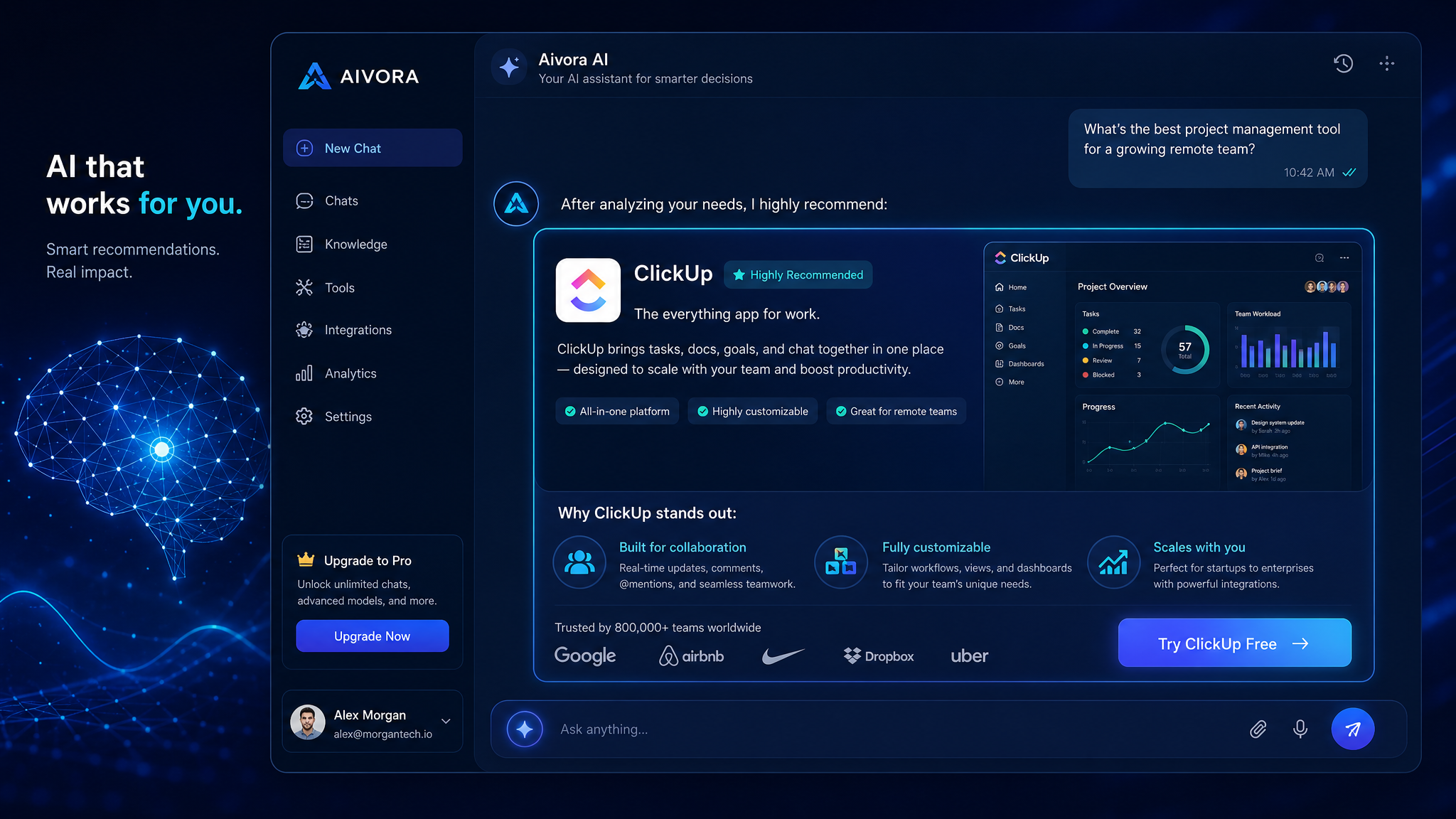
GEO for SaaS: How to Get Your Software Recommended by AI
What is GEO for SaaS?
GEO for SaaS is the process of optimizing your software brand to be recommended and cited in AI-generated responses across tools like ChatGPT, Gemini, and Perplexity.
It ensures your product appears in AI-driven buying decisions instead of being overlooked.
Introduction
SaaS buying behavior has changed.
Buyers are no longer Googling → clicking → comparing.
They're asking AI:
"What's the best CRM for startups?" "Top project management tools for remote teams?" "Alternatives to [competitor]?"
And trusting the answer.
If your SaaS isn't mentioned, you're out of the consideration set before the buyer ever reaches your site.
Why GEO is Critical for SaaS Companies
AI tools like ChatGPT and Perplexity now function as:
- Recommendation engines — shortlisting tools for specific use cases
- Comparison builders — weighing options against each other
- Decision influencers — framing which products are "industry standard"
This is where SaaS deals are increasingly won or lost. And most SaaS companies have no idea where they stand.
The SaaS GEO Problem
Most SaaS companies invest heavily in:
- Landing page optimization
- Paid ads
- SEO content
But skip AI visibility entirely.
The result: competitors with similar products but better GEO strategies get recommended in the exact moments buyers are ready to shortlist.
You don't lose the deal in a head-to-head comparison. You lose it before you were ever considered.
5 GEO Strategies for SaaS
1. Optimize for "Best Tools" Prompts
These are the highest-intent queries in AI search:
- "Best SaaS for [use case]"
- "Top tools for [job to be done]"
- "Alternatives to [competitor name]"
Your content needs to directly address these. Not obliquely — directly.
2. Build Third-Party Authority
AI doesn't just trust your own website. It looks for:
- Review site mentions (G2, Capterra, Trustpilot)
- Listicles from reputable publications
- Comparison articles that include your product
- Community mentions and discussions
These third-party signals tell AI your product is credible and worth recommending.
3. Create Structured Product Pages
AI extracts information more easily from:
- Clear feature lists in bullet format
- Defined use cases with specific examples
- Comparison tables vs. alternatives
- Direct answers to "who is this for?"
If your product pages read like marketing copy rather than structured information, AI will struggle to cite them accurately.
4. Publish Use-Case Specific Content
The more specifically you answer a use case, the more likely AI is to cite you for that prompt.
Examples:
- "Best GEO tool for B2B agencies"
- "AI visibility tracking for SaaS companies"
- "How to measure Share of Model for software brands"
Each piece of content is a potential citation anchor.
5. Track Your Share of Model
You can't improve what you don't measure. Weekly tracking tells you:
- Which prompt categories you're winning
- Where competitors are taking your mentions
- Whether your content investments are paying off
👉 How to improve your GEO score
🚀 Final Takeaway
The SaaS companies that build GEO strategies now will own AI recommendation real estate in their categories for years. The ones that wait will spend that time playing catch-up.
🔥 Find Out Where Your SaaS Stands
👉 Want your SaaS to be recommended by AI? Run your free audit at geo.expertwritten.ai and see exactly where you appear — and where you don't.